Skip to content
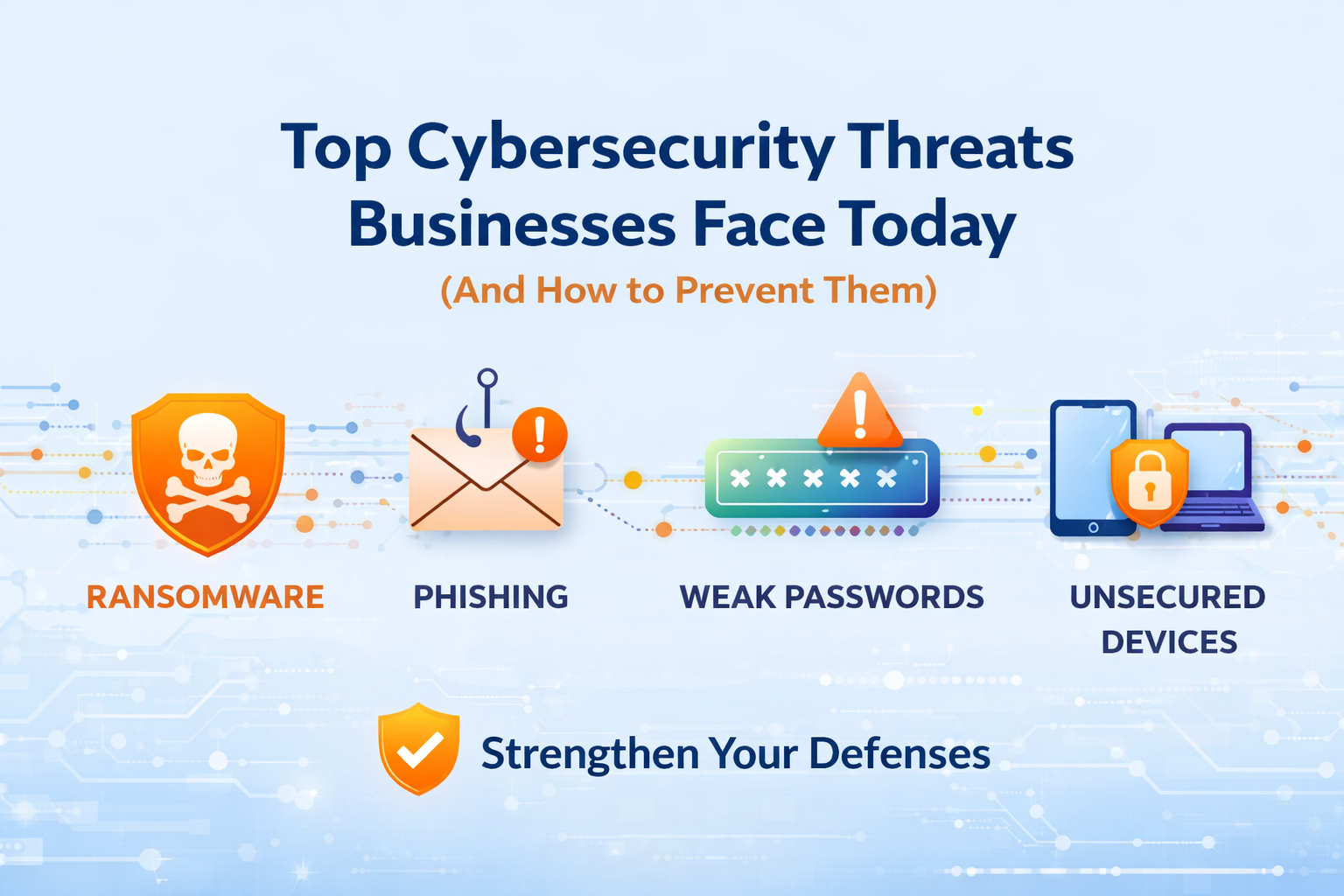
Top Cybersecurity Threats Businesses Face Today (And How to Prevent Them)
Cybercrime is on the rise, costing businesses billions of dollars every year. Understanding the top cybersecurity threats businesses face is essential to protecting your company from data breaches, financial loss, and operational downtime.
Many small and mid-sized businesses lack the tools, training, and expertise needed to defend against modern cyberattacks, which makes them prime targets for hackers. The good news is that with the right awareness and strategy, you can significantly reduce your risk.
Why Cybersecurity Matters for Businesses
Cybercriminals are constantly evolving their tactics, targeting businesses of all sizes to steal sensitive data, disrupt operations, and demand ransom payments. Whether it is customer information, financial data, or internal systems, no business is immune.
Taking a proactive approach to security starts with understanding what cybersecurity is and building the right protections around your people, systems, and data.
What Is Ransomware?
Ransomware is a type of malware that encrypts your data and holds it hostage until a ransom is paid. These attacks have become increasingly common and costly for businesses.
How to Prevent Ransomware Attacks
- Install and maintain up-to-date antivirus and anti-malware software
- Train employees to recognize phishing emails and suspicious links
- Regularly back up your data to secure locations
- Keep all systems and software updated with the latest security patches
If you want a deeper look at this threat, read more about ransomware and what you need to know.
What Is Phishing?
Phishing is one of the most common and effective cyberattacks. It involves fraudulent emails or messages that appear to come from trusted sources, tricking users into revealing sensitive information or clicking malicious links.
Because phishing often serves as the starting point for larger attacks, businesses should prioritize employee awareness training and stronger email security controls. A regular cyber threat assessment can also help identify vulnerabilities before attackers do.
Common Signs of a Phishing Attack
- Urgent or threatening language prompting immediate action
- Requests for personal or login information
- Poor grammar and spelling
- Suspicious links or attachments
If you are unsure about an email, contact the sender directly before taking action.
Unsecured Networks and Devices
Unsecured networks and devices are easy entry points for cybercriminals. Many data breaches occur because of weak security practices, insider threats, or compromised credentials.
Businesses should make sure all devices, users, and access points are properly secured. Strong network infrastructure management can improve visibility, performance, and protection across your environment.
Poor Password Management
Weak passwords remain one of the most common cybersecurity risks. Simple passwords like “123456” or “password” are easy for attackers to guess and can lead to costly breaches.
How to Improve Password Security
- Use complex, unique passwords for all accounts
- Implement multi-factor authentication
- Educate employees on password best practices
Better password policies, user training, and ongoing oversight all play a role in reducing risk.
How to Protect Your Business from Cyber Threats
Preventing cyberattacks requires a proactive and layered approach. By investing in cybersecurity tools, employee training, proper network protection, and regular assessments, businesses can significantly reduce their risk.
Ongoing monitoring is also essential. Reviewing suspicious activity early can make the difference between a minor issue and a major breach. That is why monitoring and responding to threats should be part of every business security plan.
The key is preparation. Do not wait for a cyberattack to happen before taking action.
Protect Your Business Today
Cybersecurity threats are not going away, but with the right strategy, your business can stay ahead of them.
If you need help identifying risks and next steps, start with a free IT assessment.