
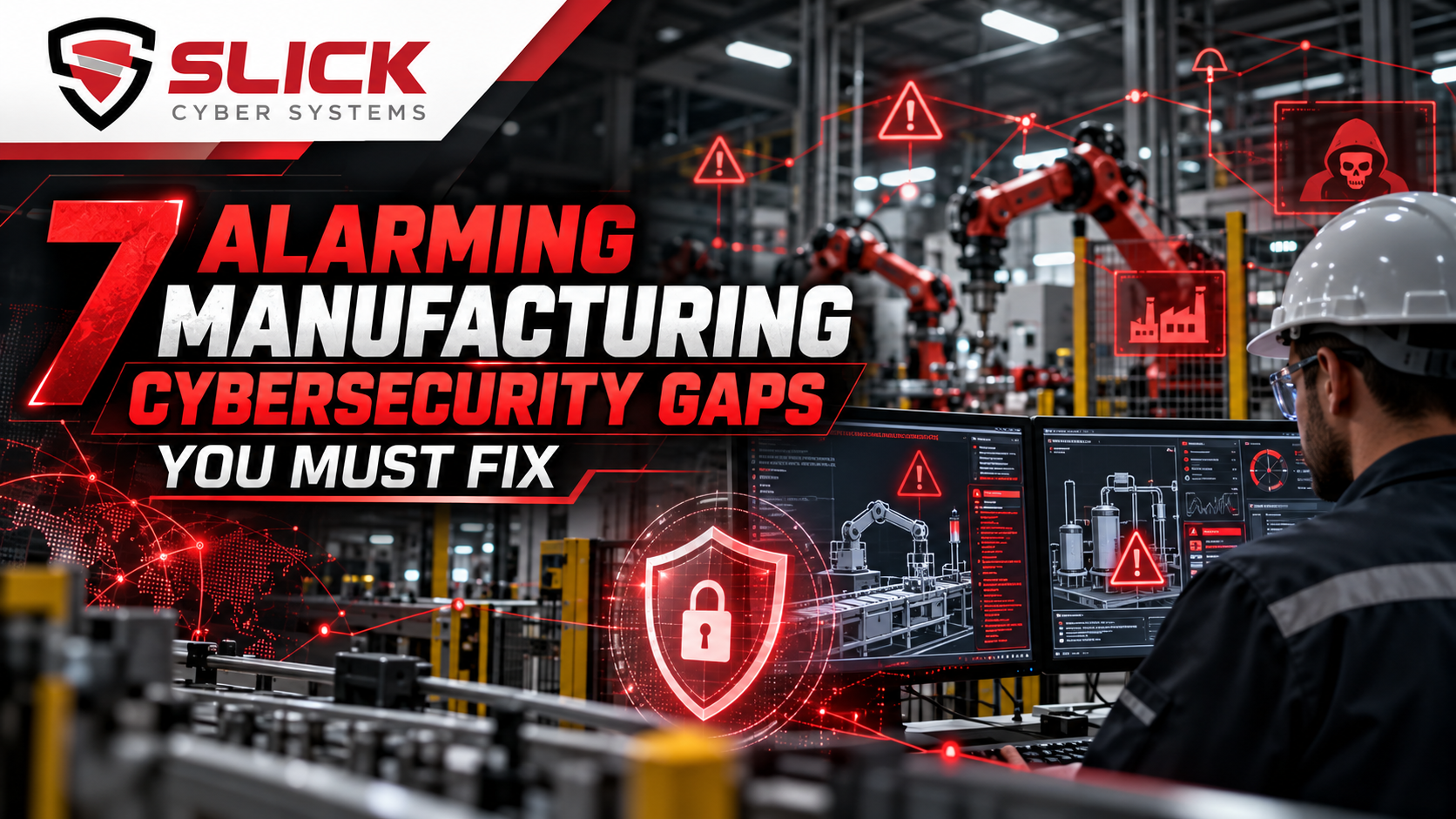
Manufacturing cybersecurity should protect your ability to operate, not simply help you pass an audit. A manufacturer can satisfy a customer requirement, complete a security questionnaire, or document required controls and still remain vulnerable to ransomware, compromised accounts, network intrusions, and production disruption.
Compliance matters.
But compliance alone does not create resilience.
The real question is:
Can your cybersecurity controls keep a cyber incident from disrupting production, ERP, shipping, inventory, and customer commitments?
Below are seven cybersecurity gaps manufacturers should address before attackers find them first.
1. Treating Compliance as the Finish Line
One of the most dangerous manufacturing cybersecurity mistakes is assuming compliance equals security.
It does not.
Compliance establishes requirements.
Cybersecurity manages risk.
A manufacturer can complete an assessment or maintain the documentation a customer requires and still have weaknesses that attackers can exploit.
For example:
- MFA may exist but not cover every critical account.
- Backups may run but never get tested.
- Security policies may exist but employees may not understand them.
- Firewalls may be installed but poorly configured.
- Administrator accounts may have excessive privileges.
NIST takes a risk-based approach to cybersecurity. Its current Cybersecurity Framework 2.0 Manufacturing Profile is an Initial Public Draft designed to help manufacturers evaluate cybersecurity posture, manage risk, and build an ongoing cybersecurity program rather than simply satisfy a checklist.
Review the NIST Cybersecurity Framework 2.0 Manufacturing Profile.
Compliance should establish the baseline. It should not define the entire security strategy.
2. Leaving Critical Accounts Poorly Protected
Attackers do not always break through a firewall.
Sometimes they simply log in.
A compromised Microsoft 365 account, administrator account, VPN account, or vendor credential can give an attacker a legitimate path into the business.
Manufacturers should review:
- Multi-factor authentication
- Administrator access
- Former employee accounts
- Shared accounts
- Password practices
- Remote access
- Vendor accounts
- Excessive permissions
The goal is simple:
If one account gets compromised, limit how far the attacker can go.
Your broader manufacturing IT services strategy should include identity protection, Microsoft 365 security, endpoint protection, monitoring, network security, and backup.
3. Ignoring Vendor and Remote Access Risk
Manufacturers depend heavily on outside vendors.
Machine vendors may need remote access.
ERP providers may connect to servers.
Software vendors may manage databases.
IT providers may maintain infrastructure.
Cloud services may host critical applications.
Every outside connection creates another access path into the business.
Ask:
Which vendors can access our systems?
What can they reach?
Do they still need access?
Does their access require MFA?
Who reviews it?
What happens when the vendor relationship ends?
A remote-access account created years ago should not remain trusted forever simply because nobody remembers it exists.
Manufacturing cybersecurity requires regular review of vendor access and remote connections.
4. Relying on Aging or Unsupported Technology
Manufacturing technology often stays in service longer than traditional office technology.
Sometimes a production application requires an older operating system.
Sometimes equipment vendors do not support newer platforms.
Sometimes replacement creates operational cost.
But unsupported systems create risk.
Older technology may:
- Stop receiving security updates
- Depend on unsupported software
- Use outdated authentication
- Lack modern endpoint protection
- Require insecure network configurations
- Create compatibility problems
Manufacturers need to identify these systems and manage the risk deliberately.
Ignoring an aging system because “it still works” does not make the vulnerability disappear.
Aging infrastructure can also contribute to downtime, poor performance, and failed recovery.
5. Assuming Backups Automatically Mean Recovery
Backups are part of manufacturing cybersecurity.
But a backup does not automatically mean the plant can recover.
Manufacturers should know:
- What systems are backed up
- How often backups run
- Whether restores have been tested
- How long recovery takes
- Whether ransomware can reach the backup
- Who owns the recovery process
- Which systems recover first
A backup that takes two days to restore may protect your data while still creating two days of production disruption.
That is why manufacturers need a tested backup and data recovery strategy.
Recovery needs to support production, not simply prove that backup files exist.
6. Failing to Detect Threats Quickly
Prevention gets most of the attention.
Detection matters just as much.
If an attacker gets into the environment, your team needs to identify suspicious behavior quickly.
The difference between finding malicious activity in minutes and discovering it weeks later can dramatically change the size of the incident.
Manufacturers should monitor:
- Endpoint activity
- Login activity
- Administrator changes
- Microsoft 365 activity
- Network behavior
- Security alerts
- Backup failures
- Unusual authentication
- Repeated account lockouts
Someone also needs responsibility for reviewing and responding to those alerts.
An alert nobody investigates does not protect production.
Slick Cyber Systems’ manufacturing cybersecurity services focus on reducing cyber risk while protecting the systems manufacturers rely on for production and operations.
7. Failing to Plan for a Cybersecurity Incident
Even strong cybersecurity cannot guarantee that every attack will fail.
Manufacturers need a recovery plan.
A cyber incident can disrupt:
- ERP
- Production schedules
- File servers
- Engineering files
- Inventory
- Microsoft 365
- Shipping systems
- Shared data
- Remote access
If those systems go offline, leadership needs answers immediately.
Ask:
How long can production operate without ERP?
Can we restore critical servers?
Can employees work manually?
Who makes recovery decisions?
Who communicates with customers?
Who contacts vendors?
How quickly can we restore critical systems?
A strong business continuity plan connects cybersecurity response to recovery priorities, communication, manual workarounds, and operational continuity.
Do not create that plan during the attack.
Manufacturing Cybersecurity Must Protect Uptime
Many businesses think about cybersecurity primarily in terms of stolen data.
Manufacturers also need to think about availability.
A cyberattack does not need to steal a single file to create serious business damage.
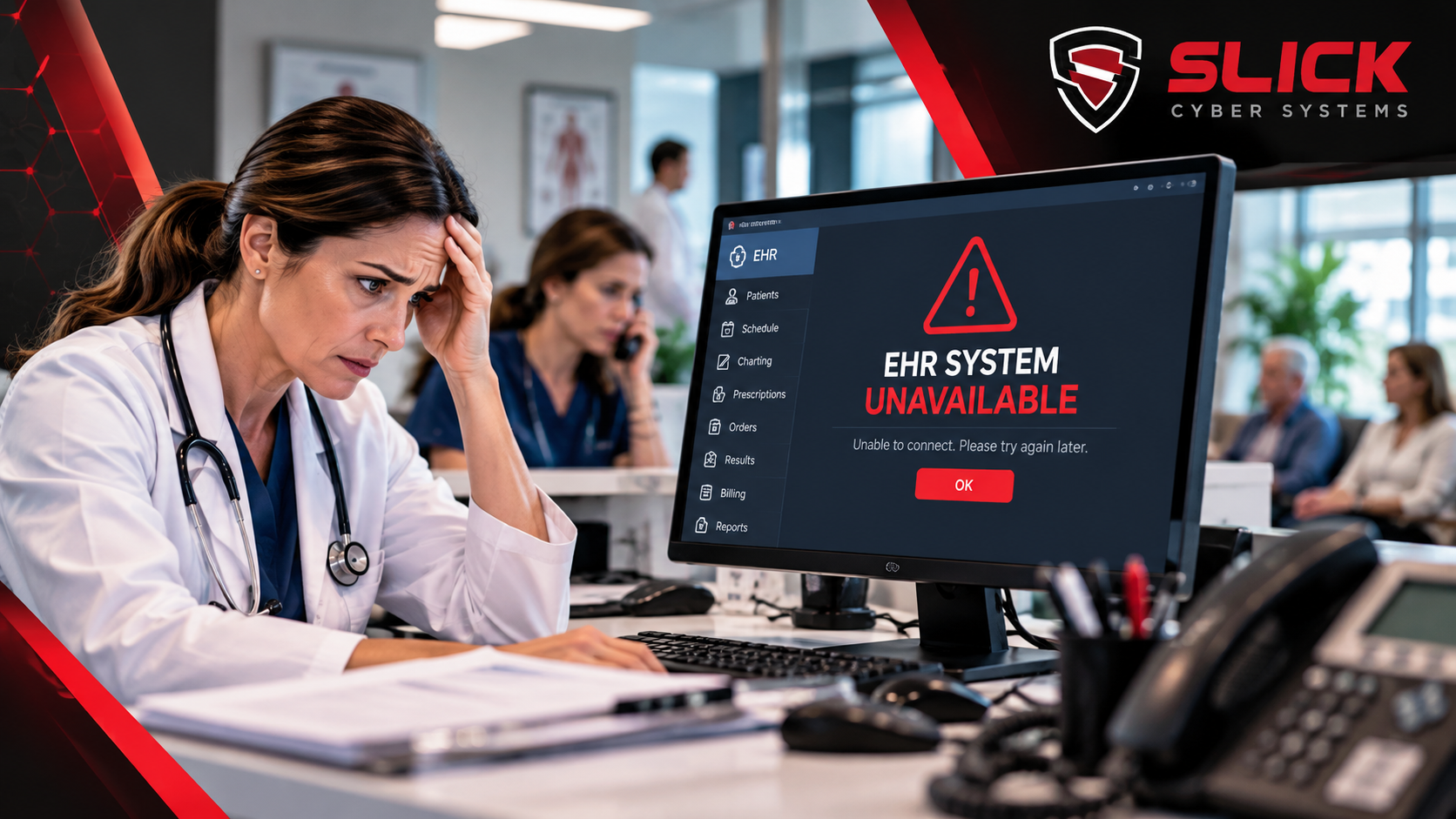
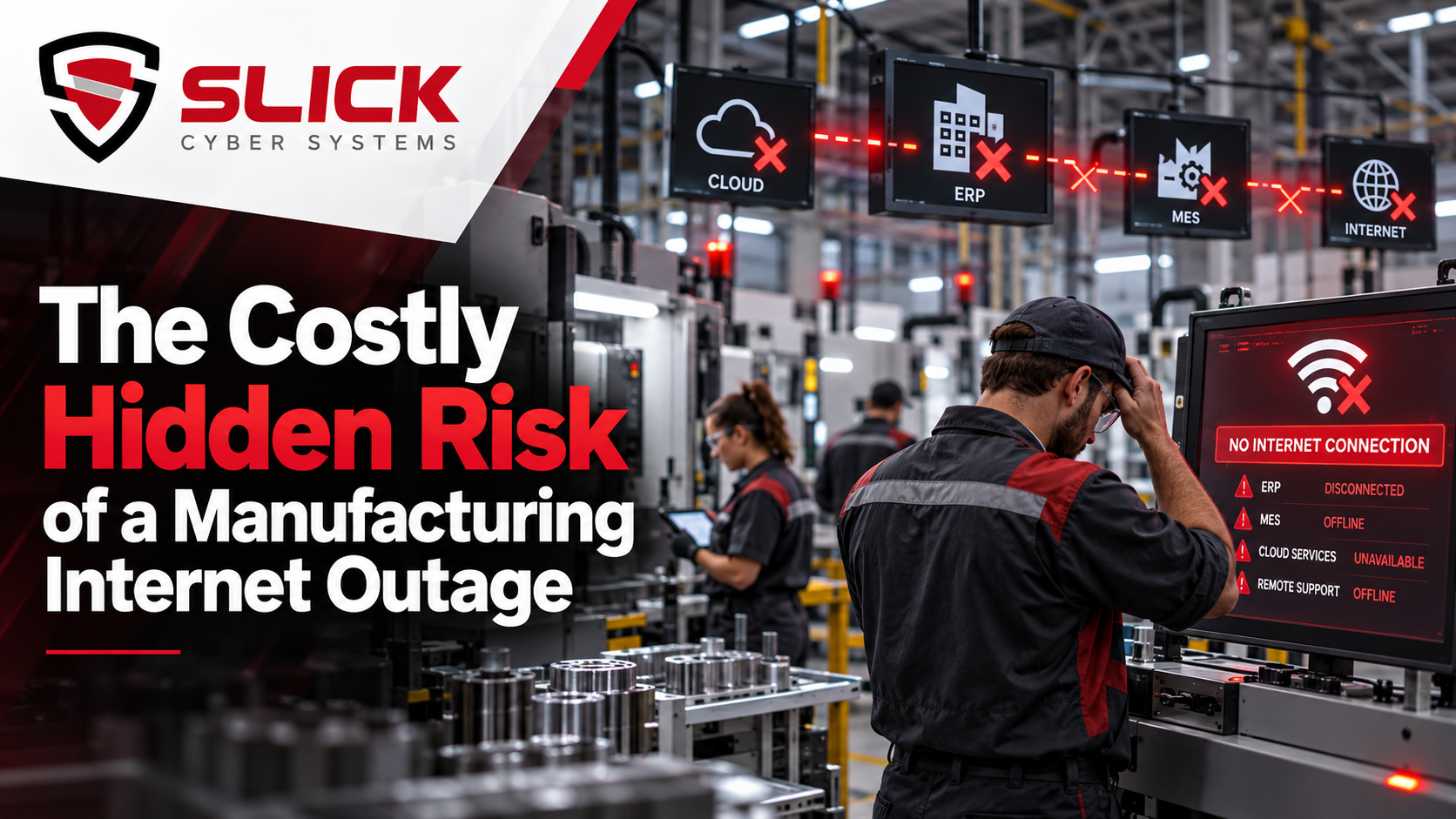
If employees lose access to ERP, production schedules, engineering files, inventory, email, or shipping systems, the plant can still suffer:
- Lost production
- Idle employees
- Missed shipments
- Overtime
- Customer delays
- Emergency recovery costs
That is why manufacturing cybersecurity must protect uptime as well as data.
Ransomware Turns Cybersecurity Into an Operations Problem
Ransomware makes the difference between compliance and resilience very clear.
An attacker does not care whether your company passed an audit.
They care whether they can gain access, spread through the environment, encrypt systems, steal information, or interrupt operations.
Once critical systems become unavailable, leadership stops asking whether the company met a requirement.
They start asking:
How quickly can we get production running again?
That is an operations question.
Manufacturing Cybersecurity Requires Layers
No single security product protects a manufacturer.
Antivirus alone is not enough.
A firewall alone is not enough.
MFA alone is not enough.
Strong manufacturing cybersecurity uses multiple layers.
Those layers commonly include:
Endpoint Protection
Protect workstations and servers from malicious activity.
Multi-Factor Authentication
Make stolen passwords harder to use.
Email Security
Reduce phishing, malicious attachments, and impersonation.
Microsoft 365 Security
Protect identities, email, and cloud data.
Patch Management
Correct known vulnerabilities before attackers exploit them.
Network Security
Control access and reduce unauthorized movement.
Vulnerability Management
Identify weaknesses before attackers do.
Monitoring
Detect suspicious activity quickly.
Backup Protection
Maintain recoverable data when prevention fails.
Employee Awareness
Help employees recognize phishing, unusual MFA prompts, and suspicious requests.
The goal is not to depend on one perfect control.
The goal is to prevent one failed control from exposing the entire business.
Manufacturing Cybersecurity Should Support the Business
Security controls need to protect the company without creating unnecessary operational problems.
That requires balance.
Do not disable security controls simply because an aging workstation runs slowly.
Fix the workstation.
Do not leave critical systems unpatched because scheduling maintenance feels inconvenient.
Plan maintenance around production.
Cybersecurity works best when IT, operations, management, and vendors understand each other’s priorities.
Manufacturing Cybersecurity Is an Ongoing Process
Risk changes constantly.
Manufacturers add equipment.
Employees change roles.
Applications get replaced.
Vendors gain access.
Cloud services expand.
New vulnerabilities appear.
Attackers change techniques.
That means manufacturing cybersecurity requires continuous attention.
NIST structures cybersecurity around six ongoing functions:
Govern. Identify. Protect. Detect. Respond. Recover.
That framework reinforces an important point:
Cybersecurity does not end after one audit or assessment.
Ask Better Questions Than “Are We Compliant?”
Instead of asking only:
Are we compliant?
Ask:
Can ransomware stop production?
Do all critical accounts use MFA?
Can we detect a compromised account?
Which vendors have remote access?
Are critical systems patched?
Can we recover our ERP environment?
Have we tested our backups?
How quickly would we know if an attacker entered the network?
Who owns the response?
Those questions expose operational risks that a compliance checklist may miss.
Fix Manufacturing Cybersecurity Gaps Before Attackers Find Them
Manufacturers need cybersecurity controls that protect:
- Production
- ERP
- Employees
- Customers
- Vendors
- Data
- Networks
- Microsoft 365
- Backups
- Business continuity
Compliance matters when customers, insurers, contracts, or regulators require it.
But compliance should establish the starting point.
The real goal is operational resilience.
Slick Cyber Systems helps manufacturers identify cybersecurity weaknesses, infrastructure risks, backup concerns, identity problems, vendor-access issues, and other technology gaps that can disrupt operations.
If you are not sure where your biggest cybersecurity gaps are, schedule a Manufacturing Technology Assessment and identify the risks before an attacker exposes them.


Leave A Comment
You must be logged in to post a comment.