10 Essential Cybersecurity Training Tips Every Business Should Follow
Your employees use email, business applications, shared files, and sensitive information every day. One convincing phishing email, stolen password, or fraudulent payment request can put your business at risk.
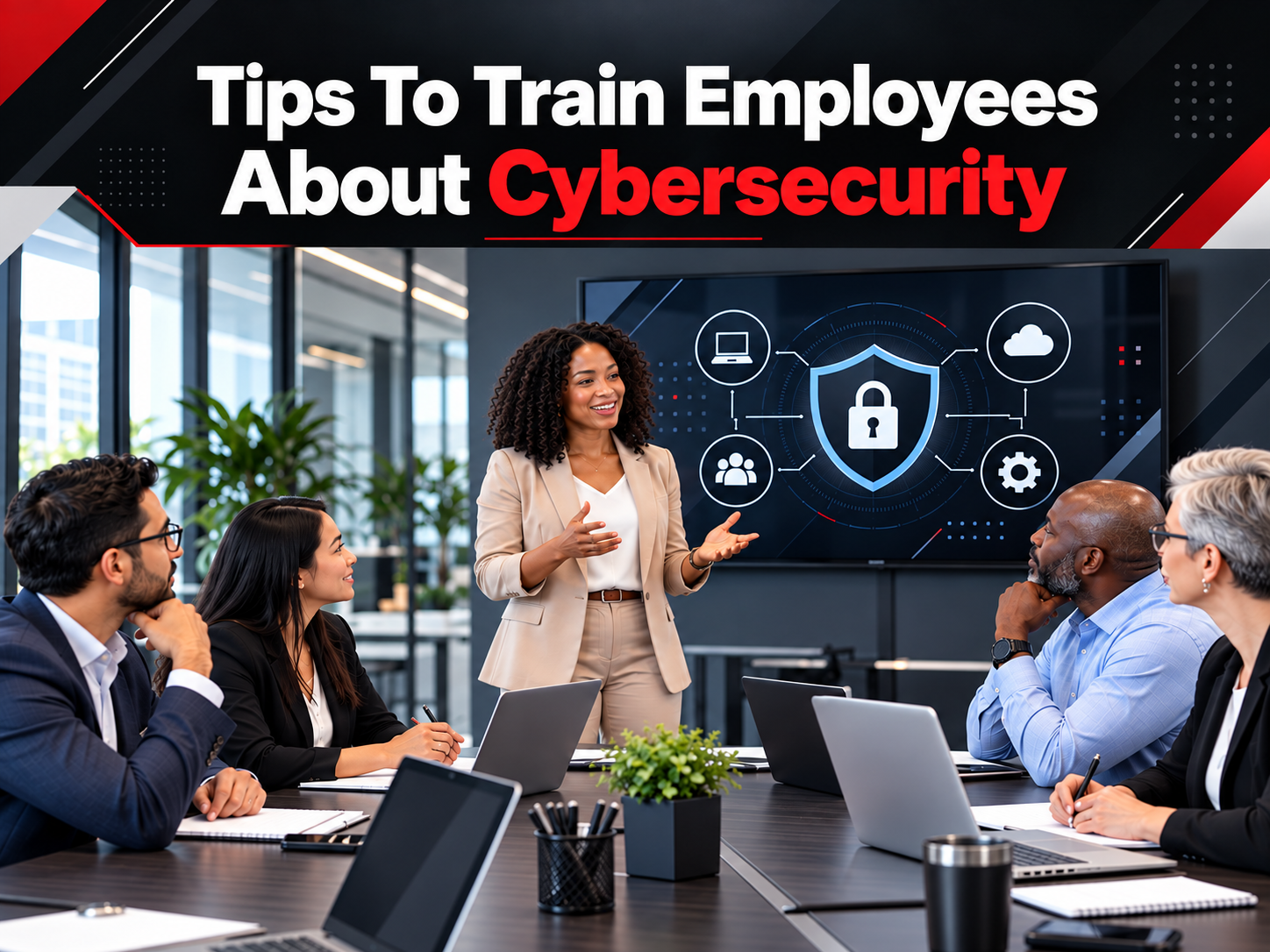
Effective employee cybersecurity training teaches people how to recognize threats, respond appropriately, and avoid mistakes that could disrupt operations. It should be practical, ongoing, and relevant to the work employees actually perform.
Here are 10 ways to make cybersecurity awareness training more effective.
1. Teach Employees to Recognize Real Business Threats
Skip complicated technical explanations.
Start with situations employees may actually encounter, such as:
- Emails requesting urgent payments or password resets.
- Unexpected Microsoft 365 login prompts.
- Suspicious attachments from supposed customers or vendors.
- Requests to change banking information.
Employees should understand what suspicious activity looks like and why it matters.
2. Use Examples Relevant to Your Industry
Cybersecurity risks look different depending on your business.
For manufacturers, a compromised account could expose vendor communications or production information.
For medical practices, employees must understand how to handle patient information and suspicious requests for access.
For accounting and law firms, fraudulent emails could expose confidential documents or financial information.
Training becomes more useful when employees recognize situations from their daily responsibilities.
3. Keep Training Short and Consistent
A single annual training session is unlikely to prepare employees for every threat.
Instead, combine introductory training with short refresher sessions throughout the year.
Focus each session on one practical subject, such as phishing, suspicious links, account security, or reporting incidents.
4. Test Employees With Realistic Phishing Simulations
Simulated phishing exercises help determine whether employees can recognize suspicious messages.
The purpose shouldn’t be to embarrass employees who make mistakes.
Use the results to identify where additional training is needed.
If multiple employees respond to the same type of suspicious email, that may indicate a weakness in the training program.
5. Make Reporting Suspicious Activity Easy
Employees sometimes hesitate to report a suspicious email because they fear getting in trouble.
That hesitation can delay an organization’s response to a security incident.
Establish a clear process for reporting unexpected login requests, suspicious attachments, unusual account activity, and possible mistakes.
Employees should know exactly whom to contact and what information to provide.
6. Establish Clear Cybersecurity Policies
Your business should have practical guidelines explaining acceptable technology use.
These may address:
- Email and internet usage.
- Handling sensitive business information.
- Sharing documents with outside parties.
- Using personal devices for work.
- Reporting suspected security incidents.
Policies should be accessible, understandable, and consistently enforced.
7. Teach Strong Password and Account Security Practices
Password security remains an essential part of employee training.
Encourage employees to use unique passwords, approved password managers, and multifactor authentication.
Employees should also understand why unexpected authentication prompts deserve attention.
A compromised Microsoft 365 account can affect business communications, shared information, and customer relationships.
8. Provide Additional Training for High-Risk Roles
Not every employee faces identical cybersecurity risks.
Employees who manage payroll, approve payments, administer IT systems, or handle confidential records may require additional guidance.
For example, accounting employees should understand how to independently verify changes to vendor payment instructions.
Administrators with elevated system access should receive training appropriate to their responsibilities.
9. Teach Employees What to Do After a Mistake
Even well-trained employees can make errors.
An employee may click a suspicious link, enter credentials into a fraudulent website, or accidentally share sensitive information.
Training should explain what to do immediately afterward.
Employees should know how to report the incident quickly without attempting to hide it or investigate it themselves.
Early reporting can help your IT and security teams respond before a problem becomes more serious.
10. Measure Whether Training Is Actually Working
Completing a training course doesn’t automatically mean employees are prepared.
Review whether employees are recognizing phishing attempts, reporting suspicious activity, and following account security procedures.
Use that information to improve future training.
The goal isn’t simply to document participation. It’s to help employees make safer decisions.
Cybersecurity Training Is Only One Part of Business Protection
Employee awareness training is important, but it cannot replace effective technical safeguards.
Businesses also need appropriate account security, patch management, endpoint protection, tested backups, and monitoring.
The Cybersecurity and Infrastructure Security Agency (CISA) provides additional guidance through its Secure Our World initiative.
The strongest approach combines informed employees with professionally managed cybersecurity protections.
Is Your Business Doing Enough to Protect Its Systems?
Slick Cyber Systems helps manufacturers, independent medical practices, and professional services businesses throughout Northeast and Central Pennsylvania improve IT security and technology management.
If your business relies on informal cybersecurity practices or you’re unsure whether your current protections are sufficient, it may be time for a professional review.
Visit Slick Cyber Systems to learn more.
Fill Out Form Below or Call Slick Cyber Systems at 570-215-8888 to discuss your cybersecurity needs.